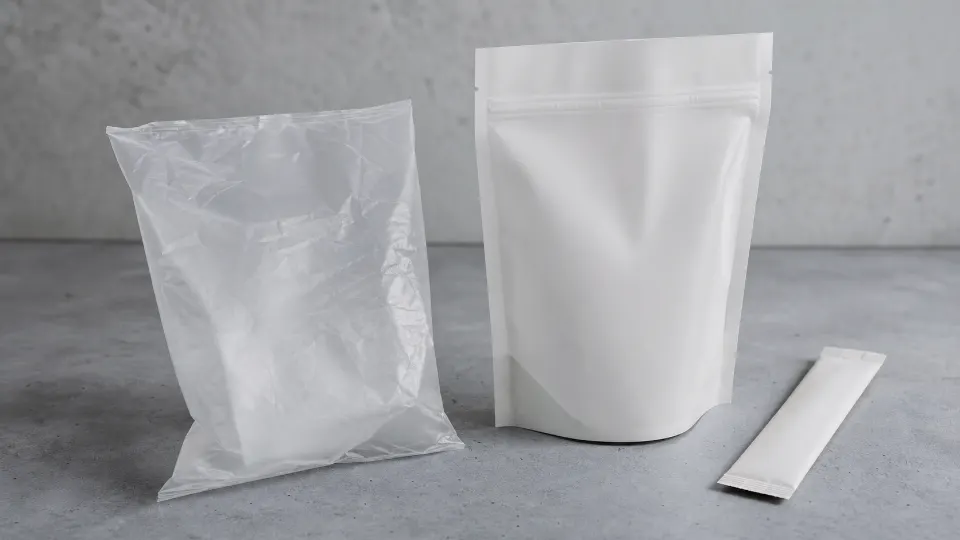
Article 9 sorts packaging into three groups. Must be compostable by 12 February 2028: permeable tea, coffee and other beverage bags, soft single-serve units such as pads, and sticky labels on fruit and vegetables — compatible with industrial composting, and with home composting where a Member State requires it. May be required to be compostable by a Member State: non-metal beverage capsules and lightweight plastic carrier bags. Everything else, including biodegradable plastics, must be designed for material recycling by the same date.
Who this applies to: makers of tea bags, coffee pads and capsules, produce stickers and carrier bags, and anyone marketing “compostable” or “biodegradable” packaging. What it changes: compostability stops being a general green claim and becomes a route reserved for a short list of formats.
The three groups
| Group | Packaging | Requirement | Article |
|---|---|---|---|
| Mandatory compostable | Permeable tea, coffee or other beverage bags; soft after-use single-serve units containing a beverage (Art. 3(1)(1)(f)); sticky labels on fruit and vegetables | Compatible with industrial composting in bio-waste facilities, and with home composting where the Member State requires it, by 12 Feb 2028 | 9(1) |
| Optional, by Member State | Non-permeable beverage system single-serve units for machines (Art. 3(1)(1)(g)) not made of metal; very lightweight and lightweight plastic carrier bags | A Member State with suitable bio-waste collection and treatment may require them to be compostable | 9(2)(a) |
| Optional, legacy | Other packaging a Member State already required to be compostable before the PPWR applied | May keep that requirement | 9(2)(b) |
| Everything else | All other packaging, including biodegradable plastic polymers and other biodegradable materials | Designed for material recycling under Article 6, without harming other waste streams, by 12 Feb 2028 | 9(3) |
Article 9(1) is material-neutral. The Commission’s guidance confirms it covers permeable bags and soft single-serve units made of any material, paper-based pads included — so a paper coffee pad must also be designed for composting by 12 February 2028.
Member State options
A Member State may use Article 9(2) only where it allows compostable waste to be collected with bio-waste and has the collection and treatment infrastructure to make sure compostable packaging actually enters the bio-waste stream. The guidance adds that:
- Member States could decide on additional compostable formats beyond Article 9(1) and 9(2)(a) only until 12 August 2026, and only as industrially compostable;
- they should publish explicit lists of formats they require to be compostable or home-compostable, and notify the Commission;
- they may require home-compostability even before a harmonised home-composting standard exists.
The practical consequence: the same plastic or paper-based capsule may need to be compostable in one country and recyclable in its neighbour. Metal capsules are outside this option and stay on the recycling route. Check national lists market by market.
Proving compliance
| Question | Position today |
|---|---|
| Which standard? | EN 13432 (industrial composting) can be used as guidance until new harmonised standards are adopted |
| Presumption of conformity? | Not yet. It returns only once a decision listing the new harmonised standards is published in the Official Journal |
| Home composting? | Existing national standards and certification schemes may be used as evidence, but do not create a presumption of conformity |
| New standards | The Commission had to request updated compostable-packaging standards and a new home-composting standard by 12 Feb 2026 (Art. 9(6)) |
| Where it is recorded | The technical documentation under Annex VII (Art. 9(4)) |
Article 9(6) also asks that the new standards reflect real conditions — retention times, temperatures and stirring in home composts and bio-waste plants, including anaerobic digestion — and verify full conversion to carbon dioxide or methane, mineral salts, biomass and water.
Labelling
Once the harmonised label applies under Article 12(1), packaging in Article 9(1), and where applicable Article 9(2), must state that the material is compostable, that it is not suitable for home composting, and that it must not be discarded in nature. That label follows the Article 12 timetable, which depends on the delayed implementing act — see our note on the labelling delay.
What to do now
- Classify each format into one of the four rows above.
- For mandatory items, obtain EN 13432 evidence for the whole unit — filter material, seams, strings, tags and inks.
- For biodegradable plastics outside Article 9, plan a recyclable design; “compostable” will not satisfy Article 6.
- Review claims. “Biodegradable” or “home compostable” statements must be substantiated and must not mislead (Article 12(8)).
- Track national lists for capsules and carrier bags in each market you serve.
Frequently asked
Are coffee capsules required to be compostable?
Not EU-wide. Non-metal capsules may be required to be compostable by a Member State under Article 9(2)(a). Otherwise they must be recyclable.
Can I still sell a compostable plastic bag for produce?
Only where a Member State requires lightweight or very lightweight carrier bags to be compostable. Elsewhere, packaging outside Article 9(1) must be designed for recycling.
Does a certification label count as proof?
Certification against EN 13432 is good evidence, but until new harmonised standards are listed in the Official Journal it does not give an automatic presumption of conformity.
Next: see how Article 6 recyclability applies to everything outside Article 9, or check your formats in the checker.