The PPWR does not replace the Single-Use Plastics (SUP) Directive; it amends it. The change that matters most for packaging suppliers is Article 67(5): from 12 February 2029, the SUP market bans extend to extruded polystyrene (XPS) food and drink containers and cups, shrink wrap for luggage at airports and train stations, plastic loose-fill chips, and plastic multi-pack rings. The SUP recycled-content targets for beverage bottles are later deleted and taken over by PPWR Article 7.
Who this applies to: makers and users of polystyrene food-service packaging, plastic void fill, multipack rings and beverage bottles. Article 67 rewrites the Directive’s own text; the Commission’s guidance states that no national transposition is needed for the XPS extension. For the three new items, check how your Member State gives effect to them.
The five amendments
| Art. 67 | SUP provision | Change | From |
|---|---|---|---|
| (1)(a) | Art. 2(2) | The SUP Directive prevails over conflicting waste law unless Regulation (EU) 2025/40 provides otherwise | 12 Aug 2026 |
| (1)(b) | Art. 2(3), new | For single-use plastic packaging in Annex V point 3 (dine-in HORECA), PPWR Article 25(1) and (6) prevail over SUP Article 4 | 12 Aug 2026 |
| (2) | Art. 6(5)(a)–(b) | Deletes the 25 % (PET bottles, from 2025) and 30 % (all bottles, from 2030) recycled-content targets | 1 Jan 2030 or 3 years after the PPWR Art. 7(8) implementing act, if later |
| (3)–(4) | Art. 13 | Deletes the matching recycled-content reporting point; rewrites the Commission’s review of reported data | (3): as (2); (4): 12 Aug 2026 |
| (5) | Annex, Part B | Extends the bans on EPS food containers, beverage containers and cups to XPS; adds three new banned items | 12 Feb 2029 |
The PPWR applies generally from 12 August 2026, but Article 71 makes an explicit exception: “Article 67(5) shall apply from 12 February 2029.” The Commission’s guidance document mentions 1 January 2030 for the XPS extension; the date in the Regulation itself is the one to plan to.
The new SUP Part B bans
| Part B point | Item | Status |
|---|---|---|
| (7) | Food containers for immediate consumption, made of EPS or XPS | EPS already banned; XPS added |
| (8) | Beverage containers made of EPS or XPS, including caps and lids | EPS already banned; XPS added |
| (9) | Cups for beverages made of EPS or XPS, including covers and lids | EPS already banned; XPS added |
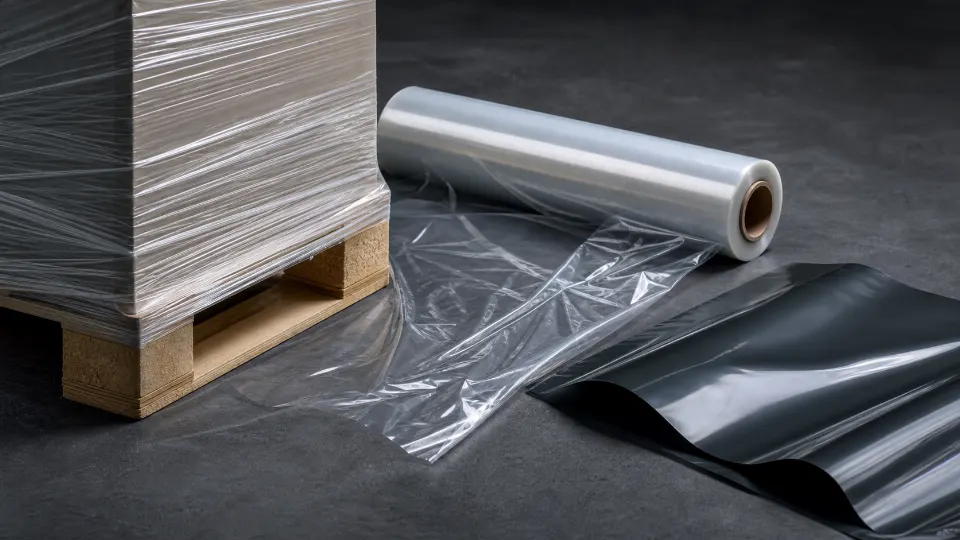
| (10) | Shrink wrap used in airports or train stations to protect luggage during transport | New |
| (11) | Chips of polystyrene and other plastics used to protect packed goods during transport and handling | New |
| (12) | Multi-pack plastic rings used as grouped packaging | New |
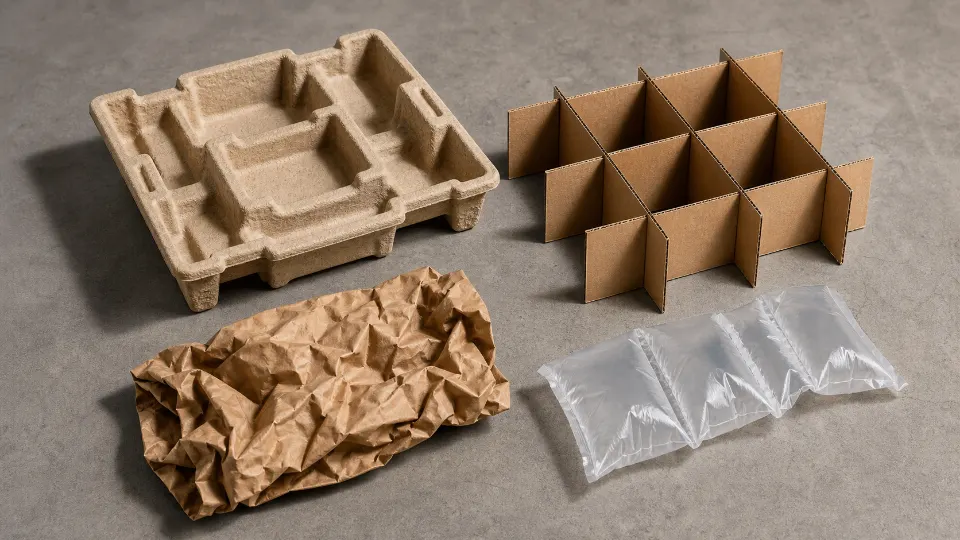
Point (11) matters well beyond food service: it covers plastic loose-fill “peanuts” of any polymer, not only polystyrene. E-commerce and industrial shippers that still use them need a paper, moulded fibre or air-cushion alternative by February 2029 — and should note that under PPWR Article 24 space filled by such materials still counts as empty space.
Bottle recycled content moves to PPWR Article 7
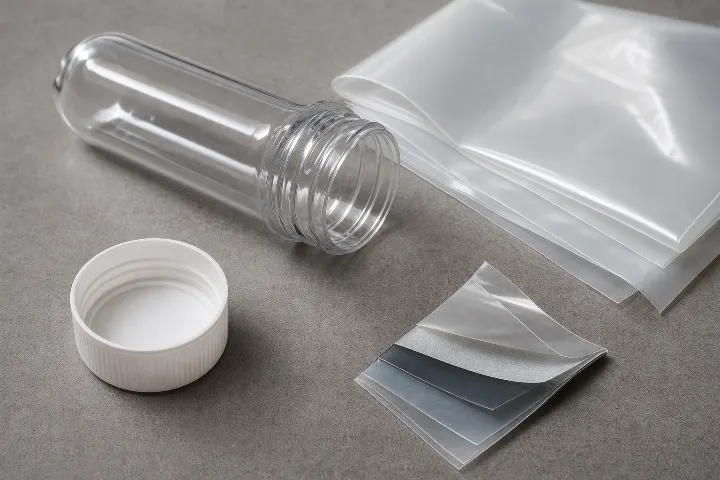
The SUP Directive set Member-State averages: 25 % recycled plastic in PET beverage bottles from 2025 and 30 % in all covered bottles from 2030. PPWR Article 7(1)(c) sets 30 % for single-use plastic beverage bottles from 1 January 2030 or three years after the Article 7(8) implementing act, whichever is later — calculated as an average per manufacturing plant and year, so the duty sits with the manufacturer rather than the Member State. The SUP points are deleted on the same date, so there is no gap and no overlap. The Article 7(8) implementing act on calculation and verification was due by 31 December 2026.
How the two laws coexist
The Commission’s guidance summarises the relationship as two instruments with different purposes that must be read together:
- For the formats, materials and uses in Annex V of the PPWR, the PPWR prevails, and Member States may not use SUP Article 4 to adopt national measures on them.
- Single-use plastic products outside Annex V — for example take-away cups and food containers — remain under the SUP Directive, and national consumption-reduction measures can stay after 1 January 2030 if proportionate and non-discriminatory.
- The PPWR’s 5 % threshold for composite packaging does not exempt partly plastic products from the SUP Directive.
The Commission also plans an evaluation of the SUP Directive in 2027, including its coherence with the PPWR.
What to do now
- Inventory XPS, plastic loose-fill and multipack rings in your range and your customers’ lines.
- Set a switch date before 12 February 2029, allowing for national implementation notices.
- Move bottle recycled-content tracking to plant level in line with PPWR Article 7.
- Check national SUP rules on cups and containers, which can continue alongside the PPWR.
Frequently asked
Are paper-based void-fill chips affected?
No. Point (11) covers chips of polystyrene and other plastics. Paper void fill is outside it, though it still counts as empty space under PPWR Article 24.
Are cardboard multipack clips banned?
Point (12) concerns plastic rings. Separately, PPWR Annex V point 1 restricts single-use plastic grouped packaging used as convenience multipacks from 1 January 2030.
Does the SUP marking for cups and beverage containers change?
Article 67 does not amend the SUP marking rules. They continue to apply as before.
Next: read the six Annex V format bans, or see the dates on the timeline.